
Tag: AI-native SDLC
-
Agentic AI SDLC: From Prompted to Autonomous, Step-by-Step Guide
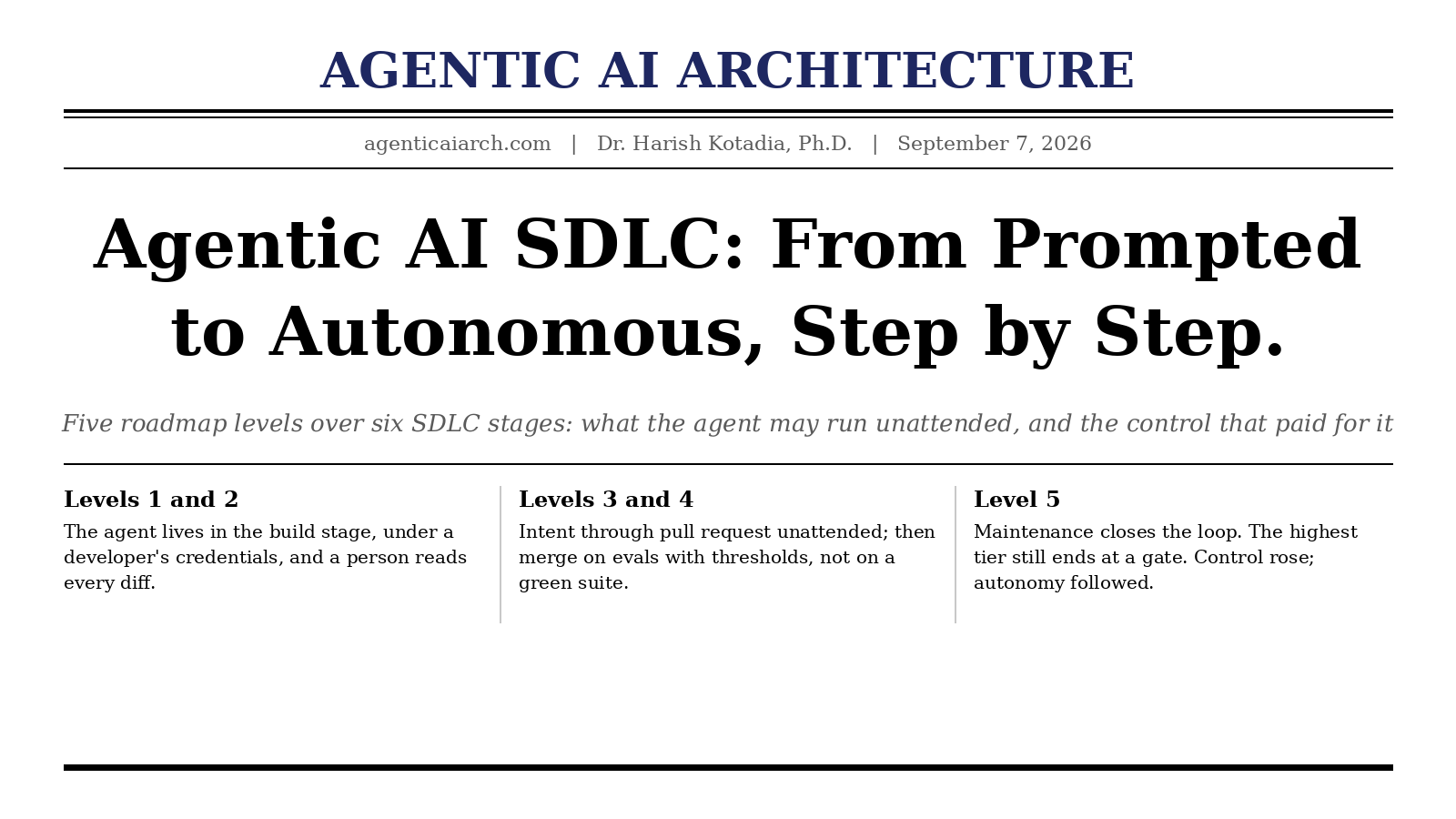
If you run software programs for a living, you already know the shape of what is coming: a maturity ladder, gates between rungs, a sign-off before the next rung is funded. That instinct is right. What changes with agentic AI is what the gates are made of. A traditional gate was a meeting, a sign-off,…
-
Agentic AI SDLC vs Traditional SDLC: What Changes
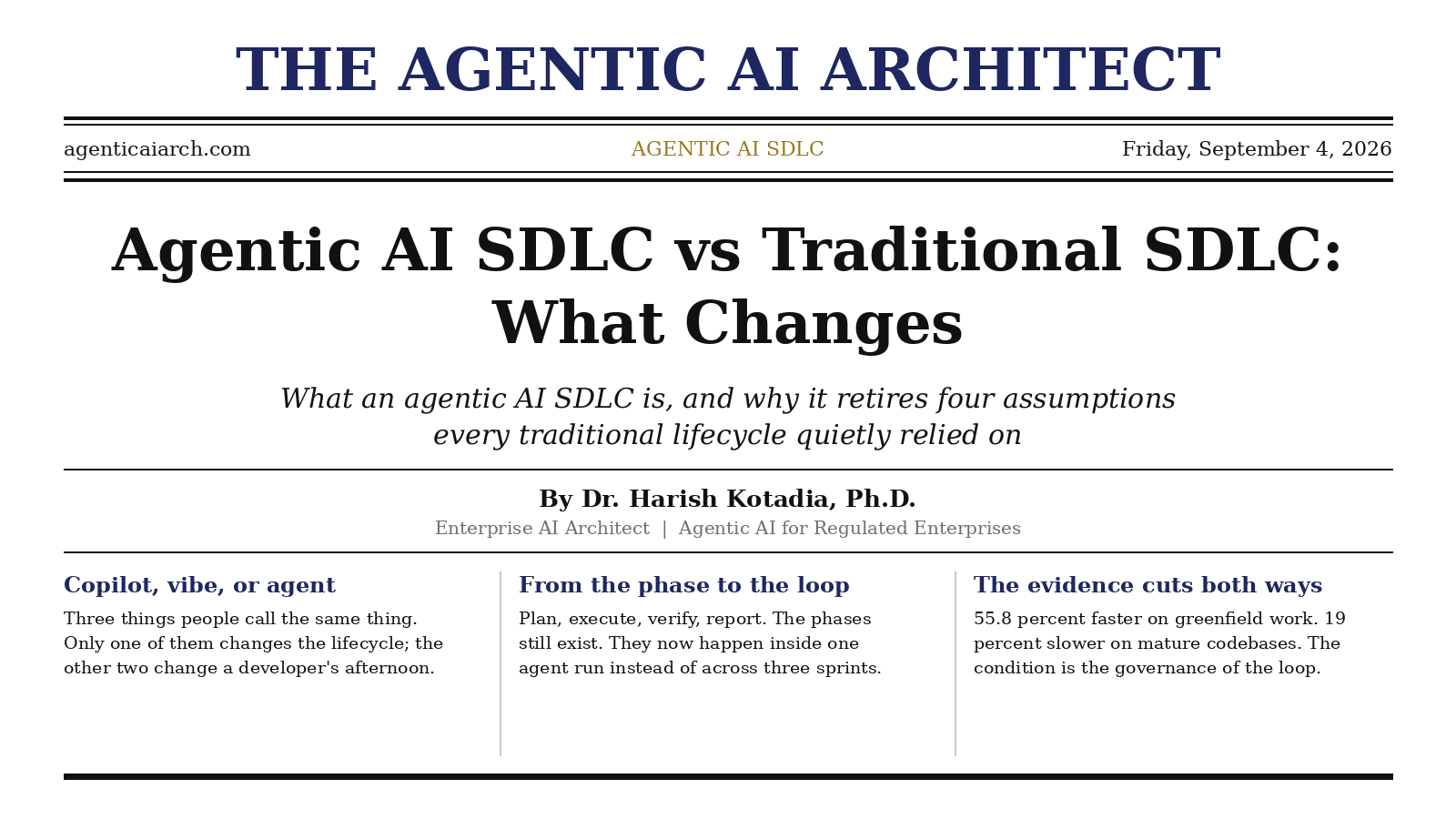
An agentic AI SDLC is a software development lifecycle in which AI agents, not developers, execute the work inside each phase, and humans move to setting intent, approving plans, reviewing outcomes and governing the loop. That one sentence is the whole difference from the lifecycle most enterprises still run. In a traditional SDLC a person…
-
What is Agentic AI Hook? Control an Agent Cannot Talk Its Way Past
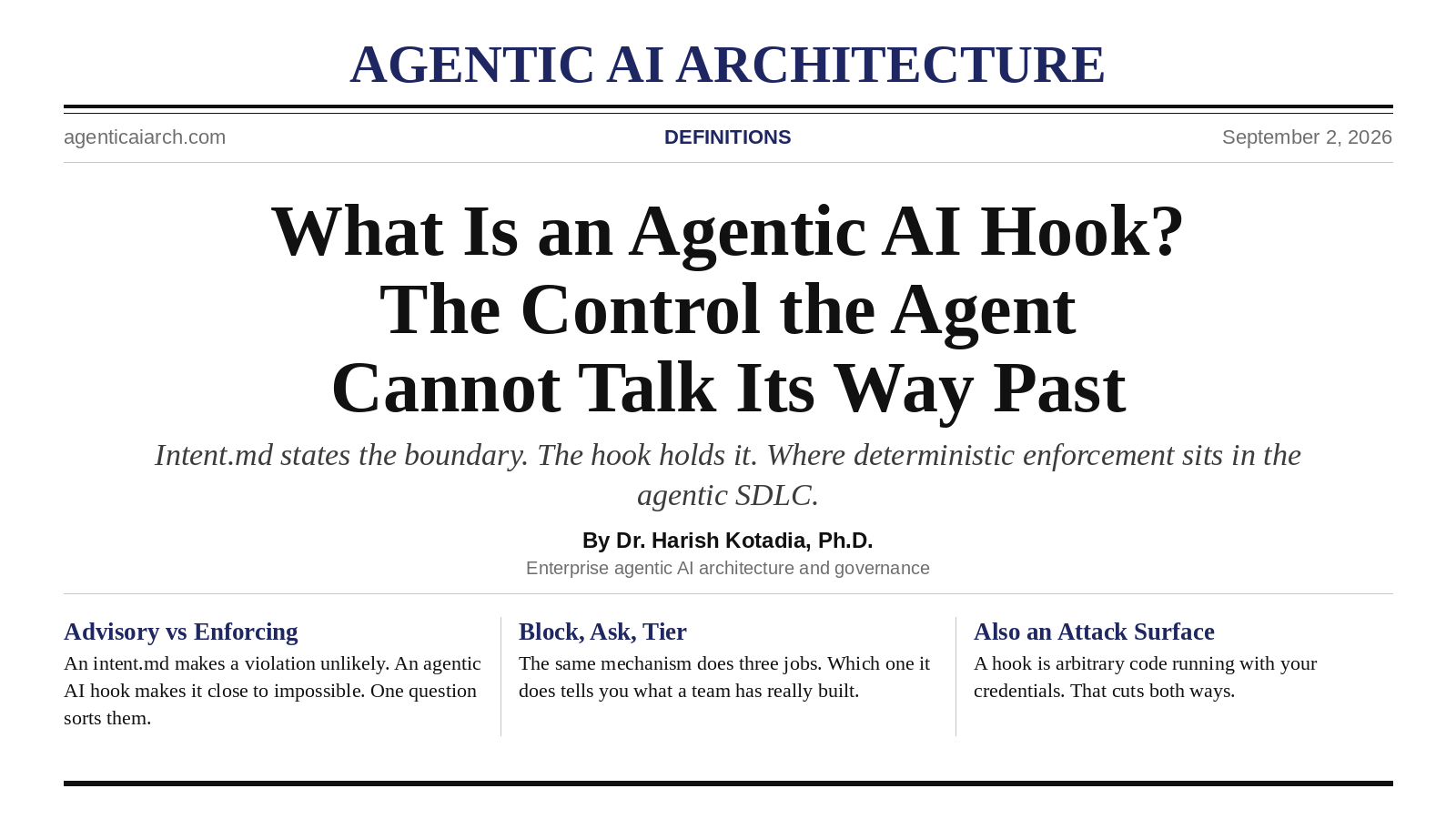
Definition: An agentic AI hook is deterministic code that runs at a fixed point in an AI agent’s loop and returns one of three answers: allow the action, block it, or stop and ask a named human. It is the one control in the agentic SDLC that decides an outcome instead of influencing one. Everything…
-
Agile in Agentic SDLC? Keep the Ceremony. Retire the Artifact.
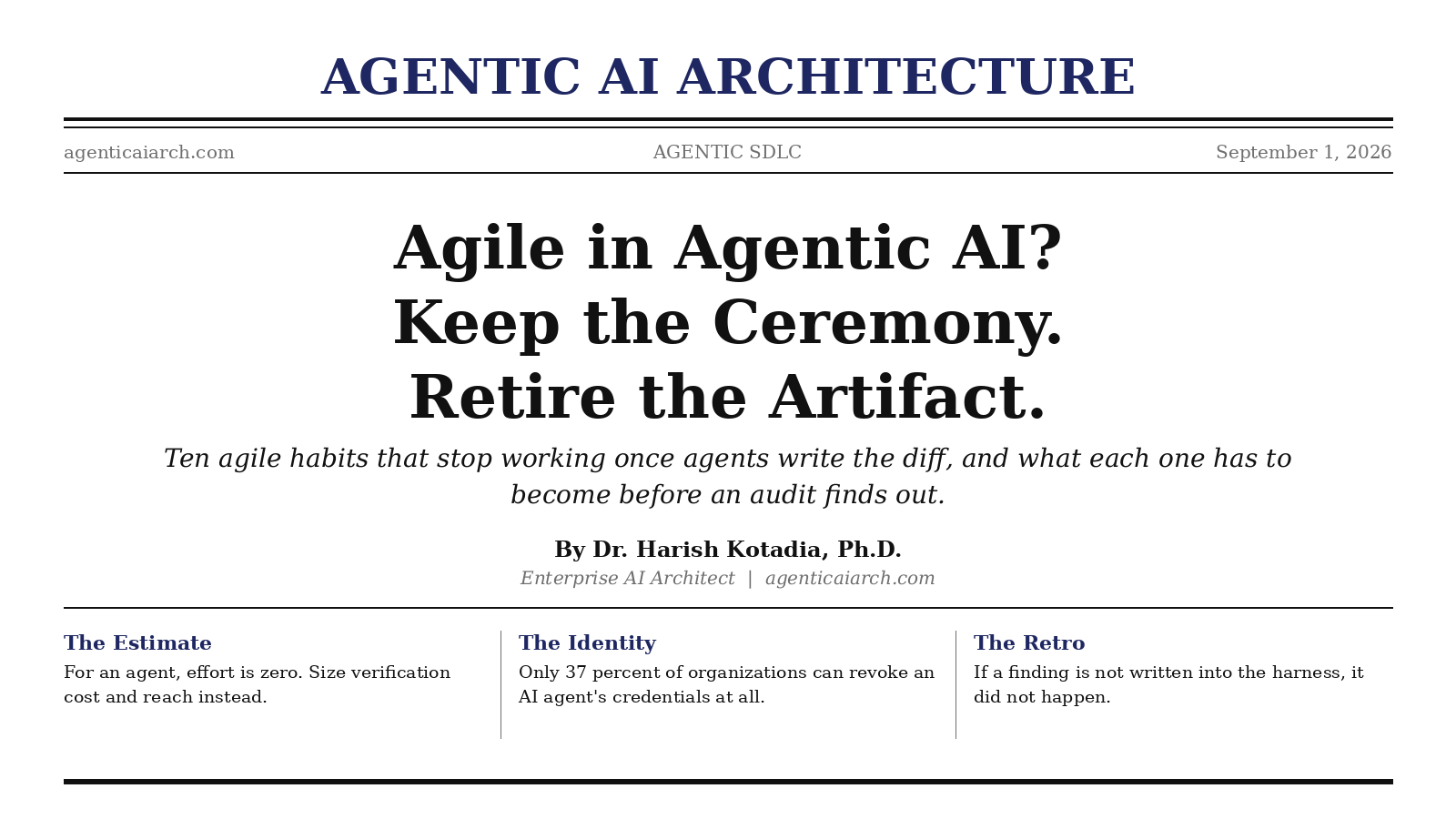
An agentic SDLC is a software development lifecycle in which AI agents complete whole units of work under enforced boundaries, and it does not retire agile. It retires agile’s artifacts. Every ceremony you run still has a reason to exist. What each one produces has to stop being a document a human interprets and start…
-
10 SDLC Assumptions Agentic AI Breaks, Mapped
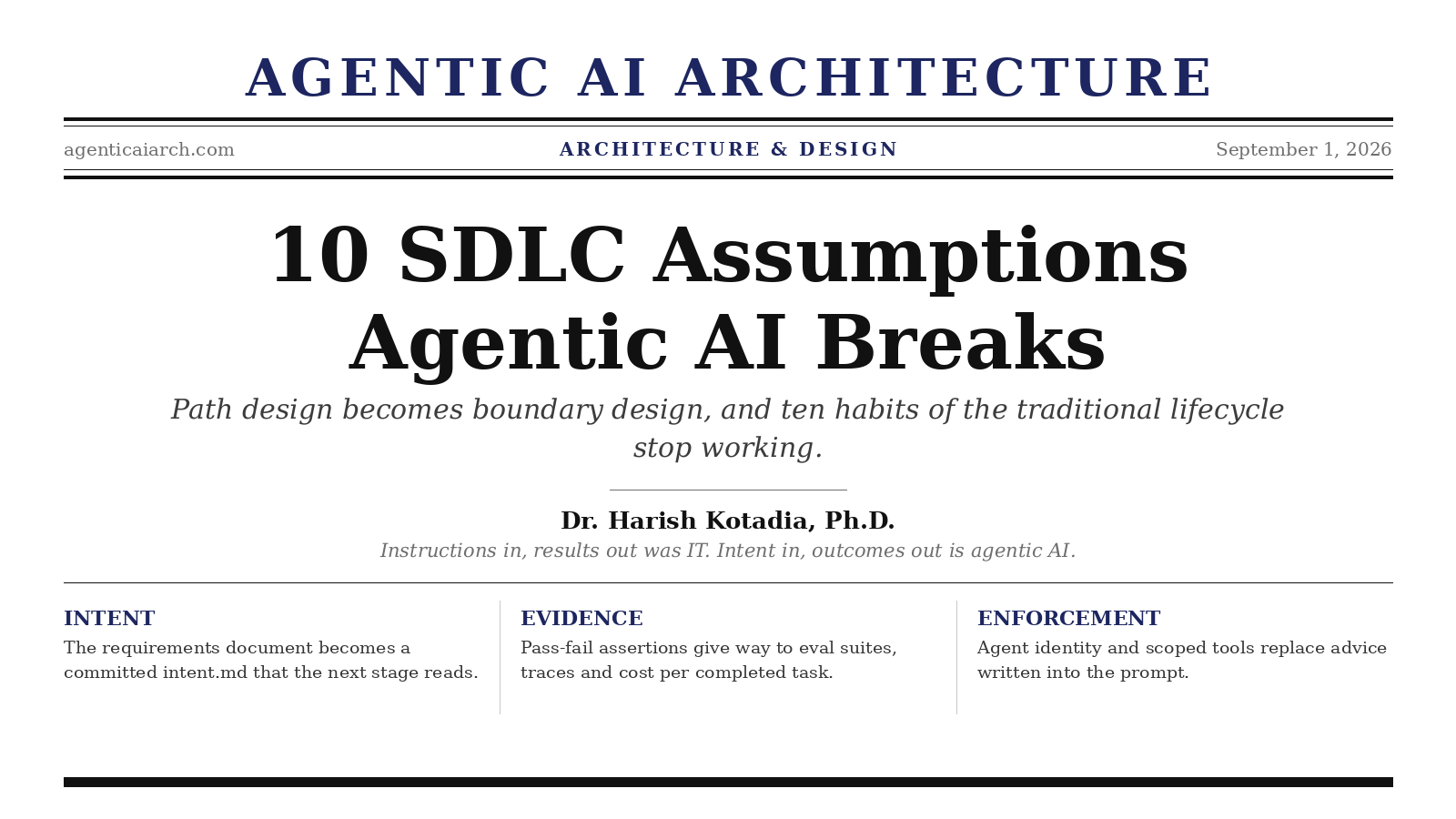
Agentic AI architecture is not the software development lifecycle with a model bolted onto it. It is a different lifecycle, because the thing being shipped no longer behaves the same way twice. The traditional SDLC assumes you write a specification, test outputs against expected values, and promote a build that behaves in production the way…
-
What Is intent.md? Treat It as a Regulated Record from Day One
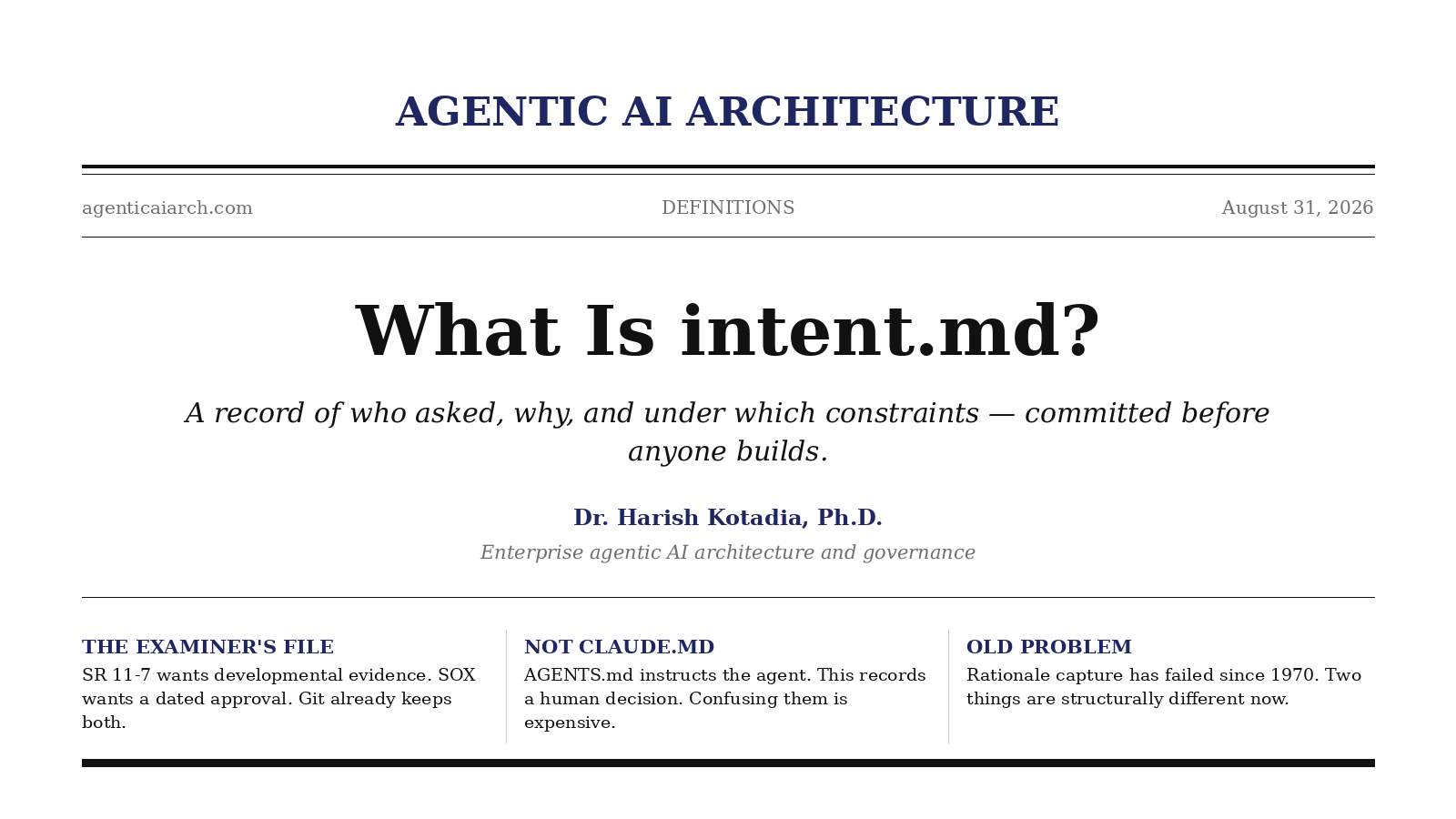
In practice the intent stage produces one artifact, intent.md, which I treat as a regulated record from day one. An intent.md is a short, version-controlled Markdown file that records the ask, the reason behind it, and the constraints it has to respect — committed before anyone designs or builds anything. It is the file Claude Code…
-
What Is an AI-Native SDLC? Intent Becomes the Unit of Work
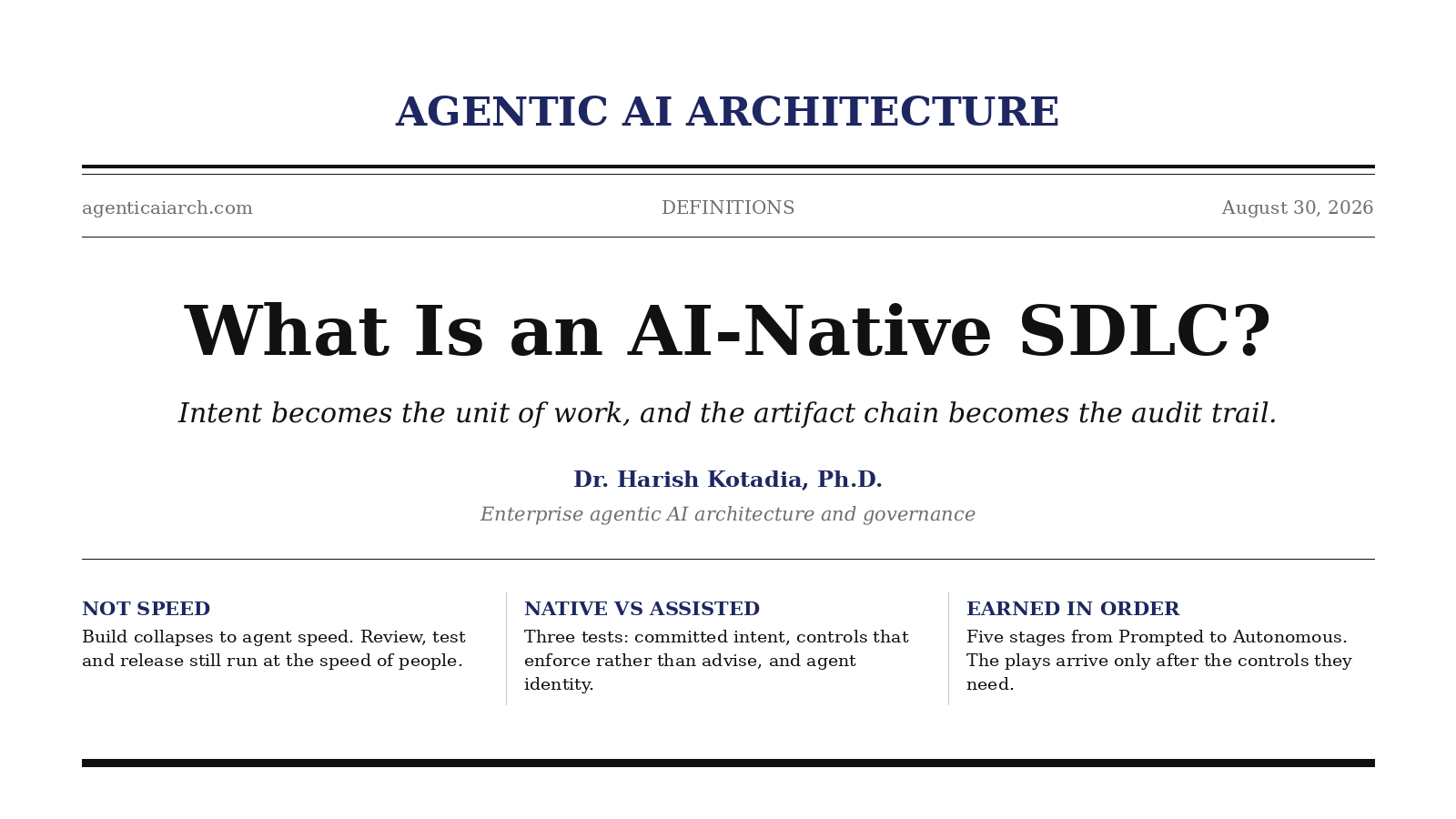
An AI-native SDLC is a software development lifecycle in which the unit of work is committed intent rather than an assigned instruction, and each stage ends by writing a version-controlled artifact that the next stage reads. Anthropic published the clearest description of one on August 21, 2026 in The AI-Native SDLC playbook, and has since…
-
The AI-Native SDLC Playbook, Staged on the Five-Stage Agentic AI Roadmap

What an AI-Native SDLC Roadmap Sequences An AI-native SDLC roadmap is the order in which an enterprise adopts the plays of an AI-native software development lifecycle — intent files, plan mode, hooks, agentic code review, continuous evals, self-closing maintenance loops — so that each play arrives only after the controls it depends on already exist.…
-
Anthropic’s AI-Native SDLC Playbook, Mapped to My Agentic AI Playbook
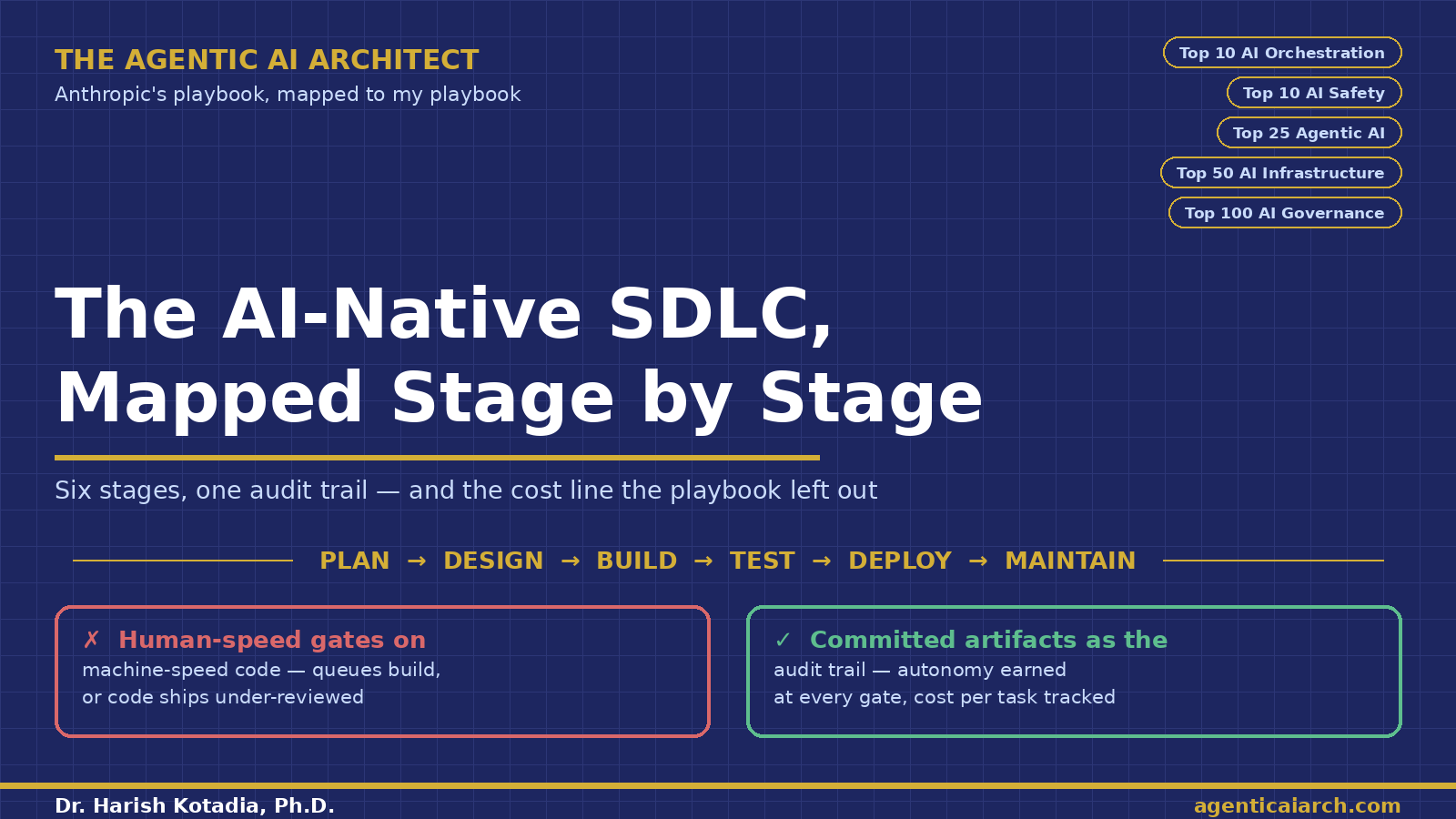
The AI-native SDLC is a rebuilt software development lifecycle in which AI is embedded at every stage — plan, design, build, test, deploy, maintain — and each stage ends by committing a version-controlled artifact that the next stage reads. That chain of artifacts, from intent.md through the spec, the plan, the diff and the incident…